Subscribe

RSS Feed (xml)

Powered By

Skin Design:
Free Blogger Skins

Powered by Blogger

Showing posts with label Hotel reservation. Show all posts

Monday, July 13, 2009

Japan Tokyo Travel Guide

Asia, Hotel reservation, Hotels, http://travelaroundtheasia.blogspot.com/, Japan Tokyo TravelThe contrasts of Japan are startling - Tokyo dazzles with bright lights and high-tech gadgetry while the cherry blossoms in Kyoto's Maruyama Park are symbols of peace and beauty, as they have been for over 1,000 years.

Since 1950, Japan has seen exceptional economic growth, becoming one of the world's most powerful economies. Bustling cities burst with skyscrapers, bullet trains and trendy nightlife. The brief economic dip in the 1990s is starting to recede into the distance, as rampant consumerism again picks up pace.

Yet beneath the brash modernity beats an ancient heart. This is still the realm of the exquisite art of the geisha and the skill of the sumo wrestler; where ancient festivals are celebrated and food is elevated to an art form. And Japan is still a land of great natural beauty, from the snow festivals and lavender farms of the northern isle of Hokkaido to the sun-drenched beaches of the subtropical south. Whether you choose to climb Mount Fuji or relax at volcanic hot spring resorts, Japan is unforgettable.

Japan is a modern and interesting country with a robust heritage; this place has long been famous among travelers. While Japan is one of the most expensive points to live, it is probable for the budget traveler to have a good time as well.

Japan provides a very large range of attractions, from historical and cultural treasures to modern and futuristic sights and wonderful forests, mountains and sea coasts. The two most famous tourist destinations in modern Japan are its old capital cities, Nara and Kyoto.

Nara, traditionally known as Heijokyo, was based as the capital of Japan in 7th century. Its peculiar checker-board street layout was a design idea imported from the capital city of China, Xian. Nara is situated in the Kinai plain, less than one hour from Kyoto and Osaka.

Kyoto is situated just 30-minutes by train from Nara, is the second historical capital city of Japan. The ancient western and northern parts of the city present unique chances to perceive Japanese cultural heritage.

The Japanese cuisine provides a very large variety of dishes and regional specialties. It is considered as one of the Japan's greatest attractions. The body of Japanese cuisine consists of several elements of taste, cooking techniques, and the use of the freshest seasonal ingredients.

Japan enjoy of an efficient public transportation network, particularly within metropolitan areas and among the large cities. Japanese public transportation is distinguished by its punctuality, its terrific service, and the big crowds of people using it.

Asia, Hotel reservation, Hotels, http://travelaroundtheasia.blogspot.com/, Japan Tokyo Travel
Asia, Hotel reservation, Hotels, http://travelaroundtheasia.blogspot.com/, Japan Tokyo TravelFuji Tower


Afriqiyah Airways offer cheap and relibale flights and links Europe with Africa and Asia. The modern fleets consists of new Airbus 319, 320 and 330 Aircraft. Fly Afriqiyah Airways.

Monday, June 29, 2009

Orissa Travel Tour Guide

Cities

* Beleswar
* Bhubaneswar - state capital and transportation hub
* Brahmapur (previously Berhampore) - also known as Silk City
* Cuttack - the old capital of Orissa
* Koraput
* Kuruma
* Paradip - the port city
* Puri - famous for Jagganath temple and vibrant beach, and the most popular tourist destination in the state
* Rourkela - known for its steel and fertilizer plants
* Sambalpur - the biggest city in western Orissa
* Sunabeda - the Kasmir of Orissa

Temple towns

* Bhubaneswar
* Konark
* Puri

Sea beaches

* Chandipur
* Gopalpur-on-sea
* Puri
* Talasari
* Balasore

Other places of tourist interest

* Chilka Lake
* Keonjhar
* Simlipal


The State of Orissa is located in the east coast of India, bounded by the States of Andhra Pradesh, Madhya Pradesh, Bihar and West Bengal. Broadly the territory of the State can be divided into four distinct regions: The Eastern plateau (the districts Of Mayurbhanj, Keonjhar, Sundargarh and the Palalahara, the latter being a subdivision of the Dhenkanal district) is an undulating upland frequently intersected by hill ranges.It slopes down from north to south. The Central River Basin (the districts of Balangir, Sambalpur and Dhenkanal) is washed by many major rivers of the state and contains some of the most fertile parts of the state. The Eastern Hill Region to the south and south-west of the Central River Basin (erstwhile districts of Phulbani, Ganjam and Koraput) comprise of wide open upland plateaus fringed by forests. The Coastal Belt (the districts of Balasore, Cuttack, Puri and Konark a portion of Ganjam) has extensive alluvial tracts in between the hills of the west and the salty tracts of the east. Orissa, with her 156,000 sq. kms. of land, 13 percent of which is urbananized, is home to nearly 32 million people. The literacy rate grazes below the national average of 52%.

Through the centuries, Orissa has been a meeting place for various cultural migrations from different parts of the country. The economic life of the people of Orissa centers mainly around agriculture where one out of every four persons in Orissa is a tribal. Any tourist is bound to get amazed by vast lands of varied kinds of agriculture spread out throughout the state. At the same time, the state is on the threshhold of an industrial growth with an emphasis electronics, iron and mine industries and the production of cash crops such as tea, coffee and rubber.

One of the most ancient and well known village in Orissa is Village Kusupur known for village poet Nandakishore Bal. Modern literate Suryamani Jena and Artist Bimbadhar Varma. Village Kusupur is also famous for its live traditional sword fighting by the warrier class (kshetriyas) during Dussera Festival in the month of October every year organised by Kusupur Dussera Sabha.

Dussera or Vijayadashami, the tenth day of the bright half of Aswin is celebrated as the day of victory to rejoice about Durga's triumph over the demon Mahishasura.

In the Indian states including the state of Orissa, Dussera celebrates the homecoming of Rama the hero of the epic Ramayana, after his victory over Ravana, the king of Lanka. In vast open spaces, Ramleela, the folk play with music and spontaneous dialogues, retelling the story of the life of Rama, are enacted till the wee hours. Songs are sung in praise of Rama and people in thousands witness this traditional theatre with its exaggerated costumes, jewellery, makeup and drama. Larger than life figures of Ravana and other demons are burnt on cold dark nights with fireworks lighting up the sky. In the traditional villages in the state of Orissa has their own way of celebrating the Dussera. Traditional sword fighting were organised by the village associations (Akharas) mostly from the warrior class (Kshetriyas). One of the oldest tradition in the Orissa’s Village Kusupur is being kept alive for last more than hundred years by Kusupur Dussera Sabha, which has the history of its uniqueness in itself.


Getting There:
By Air : Bhubaneswar is the only civil airport in the state. It is well connected by regular flights to different parts of the country.
By Rail : Bhubaneswar and Puri are the major railway junctions for Orissa. There is an extensive railway network connecting Orissa to the other parts of the country.
By Road : The National Highways 5, 6, 23, 42, and 43 pass through Orissa. The good road network connects well with the other parts of the country as well as different places within the state.

Facts File
Area: 155,707 sq km
Population: 34.2 million
Capital: Bhubaneswar
Languages spoken: Oriya, Bengali, Hindi, English etc.
Best Time to visit: November to March
Major Cities: Bhubhneshwar, Puri, Konark

Tourist Attractions:
Bhubaneshwar:
Bhubaneswar, the capital of Orissa, is also popularly known as the "Temple City of India". Being the seat of Tribhubaneswar or 'Lord Lingaraj', Bhubaneswar is an important Hindu pilgrimage centre. Hundreds of temples dot the landscape of the Old Town, which once boasted of more than 2000 temples. Bhubaneswar is the place where temple building activities of Orissan style flowered from its very inception to its fullest culmination extending over a period of over one thousand years.

Jagannath Temple
The temple has contributed the word ‘Juggernaut’ to the English language. The fame of Puri is mainly due to this 12th century temple. The annual Rath Yatra is a considerable tourist attraction. Within its precincts are the smaller temples of Vimala, Lakshmi, Vishnu and of innumerable gods and godde

Rajarani Temple
The Rajarani temple, dating back to the eleventh century, is set in open paddy fields, and the entire structure exudes grace and elegance. The name of the temple has been the subject of much debate. The most likely explanation is that the name is related to the lovely red-and- gold sandstone used in its construction, a stone which is known locally as rajarani.

Puri
Other than the attraction of its glorious beach, this city by the sea is a major pilgrim centre in India. Adi Shankara founded one of the Peethas here. Puri’s beach, a major draw, is ideal for swimming and surfing.

Konark Temple:
The Sun Temple is an extant example of Indian devotion to the Sun-the God of all Gods, the very source of life itself. Built as an architectural morvel in the 13th century, here a colossal image of the chariot of the sun, drawn by seven horses and 24 wheels symbolizes the divisions of time.The Sun Temple of Narasimhadeva is a depiction in stone of the life of those times – Royal, Social, Religious and Military. The sun temple according to the world famous poet Rabindranath Tagore, “The language of stone, defeats the language of Man.

Thursday, June 11, 2009

Tourist Attractions in Thailand

Tourist Attractions in Thailand


Thailand has some of the most beautiful and lively cities and tourist attractions in the world. These sites not only play host to descending tourists and curious travelers, they also shield the raw beauty of unexplored regions and unique fests from the rest of the world. With TSI Holidays outbound tourist packages, you can explore the famous with the lesser known attractions and events on your tour to Thailand and its cities.

Grand Palace, Thailand

Tourist Attractions

Thailand is a place where the past meets the present and creates an ambience that is both charming in its Oriental appeal and exciting in its permissiveness. No matter where you travel in Thailand, you are bound to run into ancient palaces, shrines and Buddhist temples.

The islands and beach resorts in Thailand are a haven for water sports and adventure sports enthusiasts. The rainforests in Thailand hold the key to the heart of nature lovers with Koh Samet Marine National Park, Ao Phang Nga National Park, and Khao Yai National Park.

Events

Events and festivals in Thailand showcase the cultural heritage, natural resource, and progressive frame of mind. Bangkok International Film Festival, Chinese New Year Celebrations, Pattaya Music Festival, Toh Moh Goddess Shrine Festival, Samui Carnival, King's Cup Elephant Polo Tournament, Sukhothai Loi Krathong Festival, and Chiang Mai Flower Festival are just some of the festivals that blend Thailand's past with its present.

The Bangkok International Film Festival is one of the major annual events organized in Thailand that attracts large crowds of movie buffs and participants from all over the world. The main focus of the Bangkok International Film Festival is to promote Thai movies and South East Asian motion pictures in a big way.

Held in March every year, the Pattaya Music Festival offers you a rich medley of jazz, pop, rock and classical. Live band shows and musical extravaganzas is one of the most important features of this glorious festival that is counted among the most important annual events celebrated in Thailand.

The city of Chiang Mai brightens up with floral displays, sculptures, temple models and other interesting things made purely of colorful flowers during the annual Chiang Mai Flower festival held in February every year.

Among the most enchanting annual events that are celebrated with enthusiasm and fervor, the Samui Carnival is definitely an important event. Sponsored by Bangkok Airways, the Samui Carnival is a colorful cultural panorama that glistens with open-air parties, food stalls, folk performances, jam sessions and more. The main objective of the Samui Carnival is to raise funds for the local charities and environment conservation.

Friday, May 15, 2009

Dharamshala Travel Guide

The Tibetan Buddhist roots of Dharamsala stretch back into the 8th century, although most of the local population long since reverted to (and remains) Hindu. "Dharamsala" literally means an "inn attached to a temple", and it was so until the district headquarters in Kangra became too crowded and the British moved 2 of their regiments in the late 1840s to what is now Dharamsala. This over the years grew to be district headquarters of Kangra, and the very location is now known as the Police Lines.

Dharamsala was mooted to be the summer capital of India. But this was not to be, as much of the town was destroyed in the 7.8 magnitude earthquake of 4th April 1905, which killed over 10,000 people in this sparsely populated area.

After falling into obscurity in the early days of Indian independence, Dharamsala regained some social standing in 1959 with the arrival of the Dalai Lama and the Tibetan Government in Exile. Currently, it is a very popular hang-out for foreigners and students of Buddhism. Indeed, it is now perhaps a little too popular - many would say the town (esp. McLeod Ganj) is little more than a backpacker ghetto. Don't come here expecting calm and tranquillity.

Dharamsala stands on a spur of the Dhauladhar range amidst magnificient deodar and pine forests, tea gardens and beautiful hills.

Lying 526-km northwest of New Delhi, Dharamsala is the headquarters of the Kangra District in the Indian State of Himachal Pradesh. Kangra valley is one of the most pleasant, relaxing and spiritual places in the Himalayas. Marvelously scenic, especially upper Dharamsala is well wooded with oak, cedar, pine and other timber yielding trees and offers some lovely walks and finer views.

In 1855, Dharamsala had only two major areas where civilians settled in: McLeodganj, named after Lieutenant Governor of Punjab "David McLeod", and Forsyth Ganj, named after a Divisional Commissioner.

Lord Elgin, the British Viceroy of India (1862-63) fell in love with the natural beauty of Dharamsala because of its likeness with Scotland, his home. Lord Elgin died in 1863 while on a tour. He now lies buried in the graveyard of St. John's Church-in-Wilderness which stands in a cozy pine grove between McLeod Ganj and Forsyth Ganj.


Asia, Dharamshala Travel Guide, Himacahl Pradesh, Hotel reservation, http://travelaroundtheasia.blogspot.com/, Travel Guide


A Legend has it that Lord Elgin liked Dharamsala so much that he had sent a proposal to the British monarch to make Dharamsala the summer capital of India. However, the proposal was ignored. By 1904, Forsyth Ganj and McLeod Ganj had become nerve centers of trade , business and official work of Kangra District, But on April 4,1905, as a result of a severe earthquake, whole of the area was devastated. Alarmed at the massive destruction, the British government decided to shift the district headquarter offices to the lower reaches of spur. As a result, the present-day district courts and kotwali bazaar areas came into being which earlier had only a jail, a police station and cobbler's shop to boast of. Until India attained independence from Britain on Aug. 15,1947 McLeod Ganj and Forsyth Ganj continued to serve as health resorts and resting places for the British Rulers. But all this changed when the government of India decided to grant political asylum to the 14thDalai Lama, Tenzin Gyatsho, in 1959. In 1960, he was allowed to make McLeod Ganj his headquarters . After his arrival, trade, commerce and tourism picked up afresh. Because with the Dalai Lama came thousands of Tibetan refugees, who gradually settled in McLeod Ganj. During the last three decades, The Tibetans have built many religious, educational and cultural institutions in and around McLeod Ganj, which has helped in preservation of their culture. This has been a keen area of interest for the people around the world and as a result they flock at Dharamsala at various times.

The present Kangra district came into existence on the 1st September 1972 consequent upon the re-organization of districts by the Government of Himachal Pradesh. It was the largest district of the composite Punjab in terms of area till it was transferred to Himachal Pradesh on the 1st November, 1966 and had Six (6) tehsils namely Nurpur, Kangra, Palampur, Dehra Gopipur and Hamirpur. Kullu was also a tehsil of Kangra district up to 1962 and Lahul & Spiti, which also formed a part of Kangra, was created as a separate district in 1960. On the re-organization of composite Punjab on the 1st November, 1966 the area constituting Kangra district were transferred to Himachal Pradesh along with the districts of Shimla, Kullu and Lahul & Spiti and tehsils of Una and Nalagarh and 3 villages of Gurdaspur district.

Kangra Valley

Kangra district derives its name from Kangra town which was called Nagarkot in the ancient times Kangra proper originally was a part of the ancient Trigartha (Jullundur) which comprises of the area lying between the river "Shatadroo" (probably Sutlej) and Ravi. A tract of land to the east of Sutlej, which probably is the area of Sirhind in Punjab also, formed a part of Trigratha. Trigratha had two provinces. One in the plains with headquarters at Jalandur and other in the hills with headquarters at Nagrkot (the present Kangra).

In the time of Harsha, the famous Chinese pilgrim Huien Tsiang visited Jullundur some time in March 635 AD and in his writings he has referred to the principality of Jullundur situated towards the north- east of China-Po-ti (China Bhakti) and towards the south east of Kiu-lo-to (Kullu). From the history of Kashmir given in the Rajtirangini, Raja Shanker Verma (883 to 903) of Kashmir held suzerainty over Prithi Chand of Trigartha.

Asia, Dharamshala Travel Guide, Himacahl Pradesh, Hotel reservation, http://travelaroundtheasia.blogspot.com/, Travel Guide

In ancient times a number of petty chiefs ruled in the hills within their respected domains owning allegiance to the powerful Raja at the center. However, Katoch princes ruled over Kangra from the earliest times. At the time of invasion of Punjab by Alexander in 326 BC Trigartha was ruled by a Katoch prince.

In the beginning of 11th century, Mahmood of Ghazni finished the Turki Shah family and the Hindu Shahi dynasty of Kabul in Afghanistan and after defeating a large Hindu army at Ohind and later at Peshawar, advanced into the plains of the Punjab. After defeating the Hindu king at Lahore he invaded Nagarkot. He was attracted by the prestige of Kangra fort. After defeating the Rajput Raja at Kangra, who had sent most of his men to fight the Muslims elsewhere, Mahmood satisfied his lust for wealth by carrying away on camel backs, enormous wealth of gold and silver from the fort and temple of Kangra. After this storm had passed away, the Katoch kings continued their rule over the Trigarth area undisturbed. Even after the conquest of Lahore by the Turks the Katoch family held some territory of Jullundur in the Plains. However, one lbrahim of Ghazni conquered this territory from the Katoch King Jagdeo Chander in 1070 AD

In1337.Mohd. Tuglak, an Afghan king of Delhi, captured the fort at Kangra in the reign of Raja Priti Chand. In 1351, however, Raja Purab Chand recovered the fort from the Muslims. One of his successors, namely Raja Roop Chand, became ambitious and led an expedition into the plains of Punjab, plundering the country right upto the outskirts of Delhi. This was an act of effrontery which could not be condemned by the Sultan of Delhi. So Firoz Shah Tuglak invaded Kangra, in 1366, to punish the Raja. The fort was surrendered after a long siege. After the death of Roop Chand, his son Singara Chand succeeded to the throne and was ruling over Kangra at the time of the invasion of Timur.

Sher Shah Suri, the Afghan king, who turned out Humayun from India, also captured Kangra in 1540. By 1555, the Muslim influence again declined. Akbar, however, subjugated the entire hill Rajas. Occasionally the hill Rajas rebelled against the imperial authorities, but after a few skirmishes with the Mughal Generals, they submitted and renewed their pledges of loyalty.

Jahangir also became interested in the kingdom of Trigarth of Kangra. He wanted to annex the territory of this state and to capture the fort, because a lot of prestige was attached to the fort of Kangra. It was said that who-so-ever, held the fort was the ruler of hill state. The invasion took place in 1615 under the command of Sheik Farid, Murtaza Khan and Raja Suraj Mal of Nurmal who was in the confidence of Jahangir. The fort could not be captured and after one year the siege had to be given up. Next year, Jahangir under Shah Quli Khan, Mohammed Taqi and Suraj Mal sent another expedition, but Suraj Mal proved unfaithful. The emperor had to send another strong force under Sunder Dass against Suraj Mal and also against the Raja of Kangra. After One year and two months siege, Sunder Dass captured the fort in 1620. The Katoch ruler lost the fort at least for 160 years. The entire state was annexed to the Mughal Kingdom and a strong garrison was left incharge of the fort. In 1622, Jahangir and Begum Nur Jahan came to Kangra via Siba and returned to Delhi via Nurpur and Pathankot. They were fascinated by beauty of the Kangra valley.

In 1752, the weak Mughal rulers of Delhi transferred Punjab to Ahmed Shah Durani. The Afghans could not successfully control these far flung areas from Kabul, so local governors were appointed to administer the territory on the behalf of the Afghan rulers. In 1758, Raja Ghamand Chand was appointed Nazim or Governor of Jullundur Doaba under the Afghans. Ghamand Chand was a brave man and a strong ruler who restore the prestige and glory of Kangra. As he was unable to capture the Kangra fort, he built another fort at Tira Sujanpur on the left bank of the Beas almost opposite to Alampur on a hill overlooking the town. This great ruler died in 1774 and was succeeded by his son Tegh Chand who died after one year in 1775

Kangra then saw the rise of another great ruler Sansar Chand(II). Though the Punjab has been given to the Duranis, the old Mughal officers had been proclaimed their independence in some outlying part of the country. Nawab Saif Ali Khan at Kangra was one such officer. Raja Sansar Chand had an ambition to recapture the fort and in 1781, he called to his aid Sardar Jai Singh of Kanhaya Misal. The Mughal officer surrendered the fort in 1783 but it fell into the hands of the Sikhs. Sansar Chand got the fort after some years by exchanging it with some territory, which he had won in the plains of Punjab. After getting the fort, Sansar Chand revived the tradition and laid a claim to supremacy over all the principalities and hill states of the Jalandur Circle. He made the hill chiefs tributary to himself in his capital at Teera Sujanpur. He erected a great Darbar Hall. For full twenty years he reigned supreme over all the hill states of Kangra, Mandi, Kullu and Chamba. Sansar Chand was well known for his generosity, kindness, bravery, justice and good administration, patronage of art and shewd judgment of men and matters. Sansar Chand was also a great builder. He had beautified many places in the territory ruled over by him. He planted numerous gardens and the one at Alampur is said to have been as beautiful as the Shalimar Gardens at Lahore. However, reckless bravery and unlimited ambition of this great Raja ultimately ruined him. His dream was to regain the far-reaching dominions of his ancestors and even to establish the Katoch rule in the entire Punjab. In 1803-1804, he invaded the plains of Punjab twice but was defeated by Maharaja Ranjit Singh. In 1805 he annexed a part of Bilaspur state, thus coming in conflict with the Gorkhas, who in the later half of the 18th century moved south to establish their dominion over the entire hilly part of India from Nepal to Kashmir and had actually come up to the river Sutlej. Gorkhas became angry at the annexation of a part of Bilaspur State,. They invaded Kangra, but were defeated. The hill Rajas of Kangra however, were feeling sore against Sansar Chand. They all approached Raja Amar Singh Thapa of Gorkhas through the Raja of Bilaspur to invade Kangra again. In 1806, with the help of the hill chiefs, the Gorkhas defeated Raja Sansar Chand who had to take refuge inside the fort. The country was laid waste and was plundered by the enemies. During the siege of the fort, a state of anarchy prevailed throughout the Kangra valley. The siege lasted for four years. After the Sansar Chand managed to get out of the fort and fled to Tira Sujanpur.

In 1809, Maharaja Ranjit Singh visited Jawalamukhi temple where Sansar Chand met him and entered into a treaty with him. It was agreed that the Maharaja should help Sansar Chand in expelling Gorkhas from the state and that in return the Maharaja would get the Kangra fort along with nearby 66 villages. The combined forces of Maharaja Ranjit Singh and Sansar Chand defeated Gorkhas. The fort of Kangra with 66 villages surrounding it, was made over to Ranjit Singh. Dessa Singh Majithia was appointed the Nazim or Governor of the fort and Kangra hills and from that day all states of the Jullundur Circle become tributary to the Sikhs. Sansar Chand returned to Tira Sujanpur where he died in 1823.

Sansar Chand's son, Anirudh Chand succeeded his father in 1823 but he was not destined to rule for a long time. Raja Dhian Singh, the Dogra chief of Jammu, the most powerful man in the Sikh kingdom after Maharaja Ranjit Singh, desired to marry one of the two sisters of Anirudh Chand. For the rulers of the Katoch family, this demand in itself was an insult. Anirudh Chand was adamant not to permit that alliance. The Maharaja got angry and led an expedition against him. Anirudh Chand had to flee and Sikhs occupied the entire state of Kangra.

After the first battle of Sikhs in March 1846, the territory of Punjab lying between the Sutlej and Ravi rivers, including the hill states of Kangra proper and Kullu were ceded to British Government. The entire area, comprising Kangra proper, Kullu and Seraj and the tracts of Lahul-Spiti, was now constituted into the Kangra district, with its headquarters at Kangra. After a few years, the headquarters of district was transferred to Dharmshala because that place was considered cooler and healthier for the British officers and also the slopes of Dhauladhar provided ample room to accommodate in a newly raised local contingent for the army.

THE KANGRA FORT The Kangra Fort was the seat of power of the Katoch Rajas from the time of its 234th Raja, Raja Susharma Chand Katoch, if not from the time of its first legendary Raja, Raja Bhoomi Chand Katoch onwards. It is said to have been founded by Susharma Chand Katoch, an ally of Kauravas in the Mahabarata war. It was the ancient capital of the Katoch kingdom and symbol of power in Punjab Hill States.The Fort is situated on a precipitous cliff overhanging the Ban Ganaga and Manjhi rivers. The ruins still dominate the Kangra valley. One can enter the fort by a narrow path. It was protected by a number of gates named after its winners like Jahangir, Ranjit Singh and the British. At the top of the fort, there was the palace of the Katoch kings.

When Mahmud Ghazni conquered it in 1009, the place was known as Bhima Nagar probably after Bhima, the second of the Pandavas. Muhammed Tughlaq also plundered the fort in 1337 but could not hold it for long. Feroz Tughlaq also invaded Kangra and laid siege of the fort in 1365 AD For six months the siege went on. Raja Rup Chand Katoch exhibited great courage and endurance, but ultimately submitted and offered apologies to the Sultan who with much dignity placed his hand on the back of the Raja.

Jahangir himself states that Akbar could not succeed in capturing the Kangra fort, it was he who did so in 1619-20. Akbar made many attempts to capture the fort but failed. However, his frequent visits to Kangra can also be inferred from the popular song sung in the hill states and elsewhere in the country in praise of Durga Jawalji.

"Nangi-Nangi Peri Mata Akbar Aya, Sone Da Chattar Chadhaya"

Encouraged by the anarchy, which prevailed in the plains, during the reign of Akbar all the chiefs of Hill States, resumed their independence and recovered the tracts of which the Mughals had deprived them. It is found that the states of Kangra, Chamba, Jammu etc. were clashing with one another frequently. Raja Bidhi Chand of Kangra and a number of Rajas of the Hill States were involved in the revolt which took place in 1889-90 AD. The 35th year of Akbar reign.

The Mughals later made friendship with Raja Sangram Dev of Jammu and with his help invaded in 1621. The Mughal forces led by Jahagir’s officers, Qasim Khan and The Raja of Jammu succeed in reducing Kangra. The Mughals entrusted the task to Sundar Das. He along with the forces of Raja Sangram Dev and also of Raja Jagat Singh of Nurpur took over the Kangra Fort the same year. The occupation of the Fort continued with the Mughals from 1621 to 1782. From 1782 to 1785 it remained under the Sikhs. Later the Mughal during the time of Shahjahan captured the Nurpur fort also in 1641.

The fall of the invincible fort of Katoch to the Mughal was possible only with the help of the Hill Rajas adjoining the state of Kangra. The Rajas of Guler and Nurpur and in particular, the Raja of Jammu, played a very important role in helping the Mughal. They were all aware about the secret hideouts of the fort, the style of defence of Kangra Rajas and their internal weakness.

In 1805, General Amar Singh Thapa invaded Kangra and laid siege of the fort for four years. Maharaja Sansar Chand had to take assistance of Ranjit Singh of Lahore who in turn wanted to take over the fort before expelling the Gorkha invaders from the Kangra valley. Maharaja Sansar Chand had to agree to the demand of Ranjit Singh and in 1809 itself the fort was taken over by the Sikhs from Maharaja Sansar Chand. The Sikhs expelled the Gorkhas from the hills forever.

After the death of Maharaja Ranjit Singh, the British violated the Treaty of Amritsar and defeated the Sikh forces. It took them only 10 years to capture Punjab and along with Punjab, Kangra fell into their hands also. During the British rule, the fort remained in their control.

The earthquake destroyed the palace and the fort in 1905 in Kangra. It is now in ruins. In the courtyard there are two temples. One is that of Lakshmi Narayan and the other of Ambika Devi, a family goddess of Katoch. Jain temple with Adinath in stone image also exists.

Jains found this place as a tirtha and settled in Kangra. The fort remained neglected during the British period but now the Archaeological Department of the Government maintains it. The fort is still an attraction to the tourists and the pilgrims visiting Kangra.

Under the shadow of the great rock wall of Dhauladhar, where those legendary shepherdesses, the Gaddi maidens, immediately above Dharamsala rises one of the main spurs of Himalayas, the dark, pine covered mountain-side reaching out towards the upper peaks that soar into the regions of eternal snow. Divided into upper and lower towns with a difference of some 457 meters (1,500-ft) between them against a background of snow-capped mountains, forests if giant conifers meet carefully cultivated tea gardens at the beautiful resort of Dharamsala which stands on the spur of the Dhauladhar range. The mountains enfold the three sides of the town and the valley stretches beyond to the south. Known for its scenic-beauty amidst high pine trees, tea gardens and other timber-yielding trees vying with one another for height, calmness and serenity. Dharamshala’s altitude varies between 1,250 meters (4,400 ft) and 2,000 meters (6,460 ft). the snow line here is perhaps more easily accessible than at any early morning’s start. The glittering rays of the sun fall upon the glossy snow and cast their reflections back in the valley in all the seven colours of the rainbow, beckoning people on.

The scene shifts as one approaches Dharamsala, the plains below wear a veil of blue while the Dhauladhar spur on which Dharamsala stands rises dark and pine covered. Now the seat of his holiness, Dalai Lama, after the Chinese conquest of his country, Dharamsala is evocative of imperial days in places like McLeodganj and ForsythGanj. Headquarters of the Kangra District, it became the capital in 1852 and is 52 years old.

Wrecked by an earthquake in 1905, it rose like a phoenix from the ashes, more resplendent than ever steadily acquiring a pride place among tourist attractions in Himachal Pradesh. When Tibetan exodus began, they first went to Dalhousie but later shifted their colony to McLeodganj in upper Dharamsala. Dalhousie’s loss was Dharamshala’s gain.

Since 1960, when it became temporary headquarters of the Dalai Lama, Dharamsala has risen into international repute as "The Little Lhasa in India".The high altitude, cool and favorable weather has contributed towards the creation of a Tibetan environment. More than 3,000 Tibetan have made Dharamsala their temporary living mostly in McLeodganj.

People

Predominant population of the district comprises of Hindus followed by Muslim, Budhists,Sikhs, Christians and Jains constitute the negligible proportion of the district population. The Hindus mostly constitute Rajputs Brahmins and Scheduled Cast. The main Rajput community in the district are viz. Katoch, Pathania, Mankotia, Dogra, Jasrotia, Jaswal, Jamwal, Katwal, Guleria, Mian, Thakur, Rana, Rathi etc. The Rajputs are well known in the history for displaying their valour and fighting qualities. The Rajput of high class never gave their daughters in marriage to those belonging to lower ones. The Brahamin generally acted as priest and religious devotees. During the early period they occupied an important position in royal courts as well as in the religious life of the people. The Brahmins also constitute various classes/groups. Those belonging to high class generally act as priest and preceptors of the people. The lower class Brahmins apart from their religious function also plough their fields. Still lower in hierarchy are Acharj and Ghirath. The matrimonial alliances of the Brahamin of different classes are restricted to their own class/group.

Apart from these, the cast Hindus also constitute communities like Sood, Khatri, Mahajan, Walia, etc; who are mainly engaged in business activities.The scheduled castes constitute Chuhre/Bhangi, Barad, Chamar, Chime, Dumne, Julie, Lobar, San-ai, Teli etc. (Hindi caste names) Matrimonial alliance of Schedule Caste are also restricted to their own community. The scheduled Tribes population is negligible in the district Gaddi and Gujars two tribal communities have lost their Scheduled Tribes status in district because of area restriction. The persons belonging to other Scheduled Tribe communities in the state mainly represent the Scheduled Tribe population in the district who are mostly in government service.

Folk Dances

Jhamakada is a group dance performed in Kangra. Women exclusively perform this dance. The dance is accompanied by a variety of percussion instruments and lyrical songs.

Fauna & Flora

Fauna

The district is rich in animals and birds, which include some of the rare species.The animals and birds that are found in the district are- (1) Ghoral, (2) Kakar, (3) Kastura, (4) Aimu, (5) Ibex, (6) Blue mountain sheep, (7) Thar, (8) Black Bear, (9) Brown Bear, (10) Panther or Leopard, (11) Snow Leopard, (12) Wild Boar, (13) Spotted Deer of Chital, (14) Samber, (15) Porcupine, (16) Flying squirrel and (17) Himalayan Pine Martin. Apart from the important game animals described above animals like Jackal, Monkey, Langoor, Fox etc. are also met within the area.

There is a variety of birds in the district like Monal pheasant, Snow cock, Western horned tragopan, Juguriam, Pea-cock, Ring dove, Spotted dove, shikara, parrot, tawny eagle, green pigeon, pigeon, gritton vulture, tits, nut cracker, Pies, Wood peaker, Crow, Himalayan fly catcher, etc. which are found in the tract of this district.

Flora

This district is rich in flora. The following various species of plants and forest trees are generally found in Kangra district.

It is also known as 'The Little Lhasa in India'. The revered Dalai Lama has set up his home in this beautiful range.


http://www.mcllo.com " An Informative, Travel and local Community Website of Dharamsala,Mcleodganj and Kangra Valley Himachal Pradesh"

Dharamsala and Dalai Lama Information.

A guide to few facts and resources to Dharamsala,Mcleodganj.
Information about Dalai Lama , His Teachings, Local News Information.


Thursday, May 7, 2009

Fiji Travel Tour Guide Tips

FIJI TRAVEL GUIDE

Once notorious as the "Cannibal Isles," Fiji is now the colorful crossroads of South Pacific travel. Of the 322 islands that make up the Fiji Group, over 100 are inhabited by a rich mixture of vibrant, exuberant Melanesians, North Beach, Mana Island, Fiji East Indians, Polynesians, Micronesians, Chinese, and Europeans, each with a cuisine and culture of their own. Here Melanesia mixes with Polynesia, ancient India with the Pacific, and tradition with the modern world in a unique blend.

Fiji offers posh resorts and hotels, good food and accommodations, nightlife, historic sites, hiking, kayaking, camping, surfing, snorkeling, and scuba diving. Travel around Fiji is easy by small plane, catamaran, copra boat, outboard canoe, open-sided bus, and air-conditioned coach. With even a month at your disposal you'll barely scratch the surface of all there is to see and do.

Best of all, Fiji is a visitor-friendly country with uncrowded, inexpensive facilities available almost everywhere. You'll love the vibrant, outgoing people whose knowledge of English makes communicating a breeze. In a word, Fiji is a traveler's country par excellence, and whatever your budget, Fiji gives you good value for your vacation dollars and plenty of ways to spend them. Bula, welcome to Fiji.


The Land


Fast Facts


Where

The Fiji Islands lie between North America and Australia, 5,100 km southwest of Hawaii and 3,150 km northeast of Sydney.

When
Fiji shares a time zone with New Zealand (GMT plus 12 hours).

Why
Fiji is everybody's favorite South Pacific country, offering a veritable cornucopia of adventure travel opportunities.

How
Fiji is the hub of South Pacific aviation. Most tickets from North America to Australia and New Zealand allow a free stop in Fiji.

Who
The 1996 census reported that Fiji's total population was 772,655, of which 51.1% were Melanesian Fijians and 43.6% were Fiji Indians.


The name Fiji is a Tongan corruption of the indigenous name "Viti." The Fiji Islands are arrayed in a horseshoe configuration with Viti Levu (great Fiji) and adjacent islands on the west, Vanua Levu (great land) and Taveuni to the north, and the Lau Group on the east. This upside-down U-shaped archipelago encloses the Koro Sea, which is relatively shallow and sprinkled with the Lomaiviti, or central Fiji, insular group. Together the Fiji Islands are scattered over 1,290,000 square km of the South Pacific Ocean.

If every single one was counted, the isles of the Fiji archipelago would number in the thousands. However, a mere 322 are judged large enough for human habitation and of these only 106 are inhabited. That leaves 216 uninhabited islands, most of them prohibitively isolated or lacking fresh water.

Most of the islands are volcanic, remnants of a sunken continent that stretched through Australia. This origin accounts for the mineral deposits on the main landmasses. None of Fiji's volcanoes are presently active, though there are a few small hot springs. The two largest islands, Viti Levu and Vanua Levu, together account for 87% of Fiji's 18,272 square km of land. Viti Levu has 50% of the land area and 75% of the people, while Vanua Levu, with 30% of the land, has 18% of the population.


Weather in Fiji

Compared to parts of North America and Europe, the seasonal climatic variations in Fiji are not extreme. There's a hotter, more humid season from November to April, and a cooler, drier time from May to October. Hurricanes can come during the "rainy" season but they only last a few days a year.

Seasonal differences in airfares should be more influential in deciding when to go. On flights from North America the low season is May to August, the prime time in Fiji. Christmas is busy but in February and March many hotels stand half empty and special discounted rates are on offer. In short, there isn't really any one travel season and every part of the year has its advantages.

Flora & Fauna

Patterns of rainfall are in large part responsible for the variety of vegetation here. The wetter sides of the high islands are heavily forested, with occasional thickets of bamboo and scrub. Natural forests cover 40% of Fiji's total land area and about a quarter of these forests are classified as production forest suitable for logging. Coconut groves fill the coastal plains. western Viti Levu On the drier sides open savanna or talasiga of coarse grasses predominates where the original vegetation has been destroyed by slash-and-burn agriculture. Sugarcane is now cultivated in the lowlands here, and Caribbean pine has been planted in many dry hilly areas, giving them a Scandinavian appearance. Mangroves can occasionally be found along some high island coastal lagoons.

Of the 70 species of land birds, 22 are endemic. The Fijian names of some of these birds, such as the kaka (parrot), ga (gray duck), and kikau (giant honey eater), imitate their calls. Red and green kula lorikeets are often seen in populated areas collecting nectar and pollen from flowering trees or feeding on fruit. The only native mammals are the monkey-faced fruit bat or flying fox, called beka by the Fijians, and the smaller, insect-eating bat. Some Fijian clans have totemic relationships with eels, prawns, turtles, and sharks, and are able to summon these creatures with special chants. Three of the world's seven species of sea turtles nest in Fiji: the green, hawksbill, and leatherback. Nesting occurs between November and February, at night when there is a full moon and a high tide.

Dateline: Fiji

1500 BC

Polynesians reach Fiji

500 BC

Melanesians reach Fiji

1643

Abel Tasman sights Taveuni

1789

Bligh and crew paddle past Yasawas

1800

sandalwood discovered on Vanua Levu

1835

Methodist missionaries arrive at Lakeba

1851

first visit by hostile American gunboats

1854

Chief Cakobau accepts Christianity

1860

founding of the town of Levuka

1862

Britain refuses to annex Fiji

1867

American warship threatens to shell Levuka

1874

Fiji becomes a British colony

1875

measles epidemic kills a third of Fijians

1879

first indentured Indian laborers arrive

1881

first large sugar mill built at Nausori

1882

capital moved from Levuka to Suva

1916

Indian immigration ends

1920

indenture system terminated

1939

Nadi Airport built

1966

internal self-government achieved

1970

Fiji becomes independent

1973

sugar industry nationalized

1978

Fijian peacekeeping troops sent to Lebanon

1981

Fijian troops sent to the Sinai

1987

two military coups led by Lt Colonel Rabuka

1987

Fiji expelled from British Commonwealth

1997

Fiji readmitted to the Commonwealth

1998

revised constitution comes into effect

2000

civil coup in May topples government

2001

Fiji elects a new government

2003

value added tax increased to 12.5 percent

2006

three percent bed tax added to hotel prices

2006

military coup overthrows Qarase government


Fiji Highlights

Fiji is brimming with colorful attractions, splendid scenery, friendly people, and exciting things to do. From the gateway city Nadi with its numerous shopping and dining possibilities, it's only a quick commuter hop to the enticing Mamanuca Group with about half of Fiji's resorts. The long, narrow Yasawa Group off the sugar city Lautoka is wilder, mightier, and less developed than the Mamanucas: The beaches are longer, the jungle-clad mountains higher, and the accommodations rougher. It's Fiji's most magnificent island chain.

Hindu temple, Nadi, Fiji

Fiji's mainland, Viti Levu, is the "real" Fiji, where much of the country's history has unfolded and the bulk of the Fijian people live out their lives. The 486-km highway around Viti Levu passes a series of appealing cities and towns with bustling markets, bus stations, shops, cafes, clubs, monuments, and facilities of every kind. The Coral Coast in the south is the country's second resort area, with a series of large hotels nicely spaced between Nadi and Pacific Harbor. Pacific Harbor itself offers access to some of the best diving, fishing, kayaking, white-water rafting, and golfing in the South Pacific, and Nananu-i-Ra off Viti Levu's north coast is a favorite of backpackers.

Fiji's current capital, Suva, has the country's finest cinemas, monuments, museums, nightlife, restaurants, stores, and all of the excitement of the South Pacific's biggest town. Ships, buses, and planes depart Suva for every corner of the republic. It's a fascinating place to explore.

Several adjacent islands allow one to escape from Suva. Kadavu to the south is a characteristic Fijian island of small villages strewn between beaches and hills, but it is also a mecca for scuba divers who come for the Astrolabe Reef, and for surfers who have discovered Kadavu's waves. Back toward Viti Levu is Yanuca with inexpensive beach camps full of enthusiastic surfers.

Anyone with even the slightest interest in Fiji's vivid history won't wish to miss Ovalau and the timeworn old capital Levuka. Across the Koro Sea from Ovalau is Vanua Levu, Fiji's second island, heart of the "friendly north." Because a slight effort is involved in getting there, far fewer tourists ply these exotic shores. Yet Savusavu is Fiji's most picturesque town (after Levuka).

Repeat visitors and local Fijians often assert that Taveuni is Fiji's finest isle, a claim which is difficult to deny. Taveuni's high spine is draped in impenetrable rainforest, with huge coconut plantations tumbling to the coast. Magnificent waterfalls pour down the steep slopes, and the scuba diving is world famous.


Activities

Fiji has been called "the soft coral capital of the world" and few seasoned divers will deny that Fiji has some of the finest scuba diving in the South Pacific with top facilities at the best prices. You won't go wrong choosing Fiji. Diving is possible year-round in Fiji, with the marinelife most bountiful from July to November.

Bouma Falls, Taveuni, Fiji

A growing number of surfing camps are off southern and western Viti Levu. There's surf throughout the year with the best swells out of the south from March to October. Windsurfing is possible at a much wider range of locales.

Exciting whitewater rafting on the Upper Navua River is offered. In the past organized ocean kayaking expeditions have been offered among the Yasawas, around Beqa and Kadavu, and in Vanua Levu's Natewa Bay.

All of the high islands offer hiking possibilities and many remote villages are linked by well-used trails. Levuka makes an excellent base with the trail to The Peak beginning right behind the town, and a challenging cross-island trail to Lovoni is nearby. More arduous is the all-day climb to Lake Tagimaucia on Taveuni. For some outer island hiking, walk right around Nananu-i-Ra in under a day, or across Waya or Wayasewa.


Events


Public holidays


January 1
New Year's Day
February or March
Birthday Prophet Mohammed
March
National Youth Day
March/April
Good Friday & Easter Monday
late May
Ratu Sukuna Day
mid-June
Birthday Queen Elizabeth
mid-October
Fiji Day
October or November
Diwali
December 25 & 26
Christmas

Check with the Fiji Visitors Bureau to see if any festivals are scheduled during your visit. The best known are the Bula Festival in Nadi (July), the Hibiscus Festival in Suva (August), the Sugar Festival in Lautoka (September), and the Back To Levuka Festival (early October).

Before Diwali, the Hindu festival of lights, Hindus clean their homes, then light lamps or candles to mark the arrival of spring. Fruit and sweets are offered to Lakshmi, goddess of wealth. Holi is an Indian spring festival in February or March.

One of the main sporting events of the year is the International Bula Marathon held in June. The main event involves a 42-km run from Lautoka to the Sheraton at Nadi. The 12th South Pacific Games, the region's major sporting event, traveled to Fiji in July 2003.


Practicalities

Everyone needs a passport valid at least three months beyond the date of entry. No visa is required of visitors from 101 countries (including Western Europe, North America, Japan, Israel, and most Commonwealth countries) for stays of four months. Tickets to leave Fiji are officially required but usually not checked.

The currency is the Fiji dollar, which is about two to one to the U.S. dollar in value. Banking hours are Monday to Thursday 0930-1500, Friday 0930-1600, although you'll get better rates and avoid the banks' high commissions by using private exchange offices like GlobalEX and Money Exchange.

Fiji is one of the least expensive countries in the South Pacific. Tipping isn't customary here, although some resorts do have a staff Christmas fund, to which contributions are welcome.


Getting Around

Yasawa Flyer While most international flights are focused on Nadi, Fiji's domestic air service radiates from Suva and two local airlines compete fiercely. Air Fiji is based at Suva's Nausori Airport while Sun Air's routes radiate from Nadi.

Most local shipping operates out of Suva. The largest company is Patterson Brothers Shipping which runs car ferries to Ovalau and Vanua Levu. Consort Shipping and Suilven Shipping serve Savusavu and Taveuni. Awesome Adventures' high speed catamaran Yasawa Flyer operates daily between Nadi and the Yasawa Group. South Sea Cruises operates the fast catamarans Tiger IV and Cougar from Nadi to the Mamanuca Islands several times a day.

Scheduled bus service is available all over Fiji, and fares are low. Most long-distance bus services operate several times a day and bus stations are usually adjacent to local markets. Shared "running" taxis and minibuses also shuttle back and forth between Suva, Nadi, and Lautoka, leaving when full and charging only a little more than the bus. They'll often drop you exactly where you want to go; drawbacks include the less safe driving and lack of insurance coverage.

Getting There

Fiji's geographic position makes it the hub of transport for the entire South Pacific, and Nadi is the region's most important international airport, with long-haul services to points all around the Pacific Rim. Eleven international airlines fly into Nadi.

A departure tax of F$30 in Fijian currency is payable on all international flights, but transit passengers connecting within 12 hours and children under the age of 12 are exempt (no airport tax on domestic flights). This tax is usually included in the ticket price.

Fiji has four ports of entry for cruising yachts: Lautoka, Levuka, Savusavu, and Suva. Calling at an outer island before clearing customs is prohibited.

Tuesday, April 28, 2009

Lodge Resort

Lodge Resort, Asia, australia hotels, http://travelaroundtheasia.blogspot.com/, Hotels, Hotel reservation, India, Travel Guide, vacations Yesterday night, I was looking for Lodge Resort on the net and luckily I found a site named Sycamore Lodge. It is situated at around 70 miles south of Raleigh and 90 miles east of Charlotte. The good thing is that it is located at such a place where you can see many area attractions. They provide many facilities like wireless internet in the lodge, gardens, swimming pool, paddle and fishing boats, mini-golf, cabins, playground for children and many more. If you will compare it with any other lodge resort then Sycamore Lodge will lead by huge margin.

Lodge Resort, Asia, australia hotels, http://travelaroundtheasia.blogspot.com/, Hotels, Hotel reservation, India, Travel Guide, vacations You can simply enjoy the best facilities in rv park nc, nc rv parksand rv park north Carolina. Here you will also get the advantages of Free Camping, upcoming Events and Activities, Driving Directions and also you will get the reviews from other Guest. After visiting their Resort, you will realize that Sycamore Lodge Resort is really different and unique from any other North Carolina RV parks. If you are interested and looking forward to know more about them then you can simply visit their sites or you can also contact them at 1-888-455-9599.

about Battlefield Resort

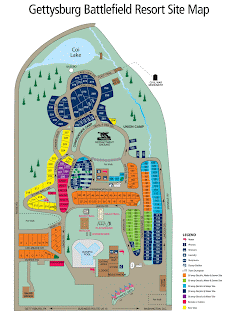
If you are looking for the information about Battlefield Resort then I know a site where you can get all the required information. The Resort is known as Gettysburg Battlefield Resort and it is basically a private campground in PA. Gettysburg Battlefield Resort is located at such a place, where you will easily find many historic destinations and attractions. You can also spend your good time at place called Soldier's National Monumen where President Lincoln gave his popular Gettysburg Address.

cheap accommodation, Hotel reservation, http://travelaroundtheasia.blogspot.com/, Hotels, India, Travel Guide, vacations
There are may places to visit like gettysburg camping, rv camping gettysburg, pa rv camping and many more such places. You can also plan to travel the short distance to the "Sweetest Place on the Earth" in Hershey, Pennsylvania and explore the heart of Dutch Country in Lancaster. It would be also nice if you take an hour and a half drive to Washington DC to visit country capital. If you found it interesting and keen to know more about the place then you can simply visit their sites or you can also contact them at 1-888-455-9579.

Monday, April 27, 2009

about LastMinute travel in Australia

http://travelaroundtheasia.blogspot.com/, australia hotels, Asia, cheap accommodation, vacations, Hotels, Hotel reservation, Hi all, Lastminute.com.au is the Australian arm of the worldwide LastMinute travel brand. They have just re-launched the Australian website and we wanted to get some buzz happening out in the travel-related blogosphere. The site, IMHO, is a massive improvement on the previous Australian LM site, which was difficult to navigate & not the prettiest site ever built :) We would like the focus of the blog posts to be around the main areas of LM's business, ie last minute accommodation, last minute flights, last minute hotels, cheap flights, qantas, singapore airlines, jetstar, virgin blue.

http://travelaroundtheasia.blogspot.com/, australia hotels, Asia, cheap accommodation, vacations, Hotels, Hotel reservation

Thursday, April 23, 2009

cheap hotels for everyone

In U.K there are a lot of tourist attraction places, where you can enjoy traveling with your families’ members or close friends. The environment here always remains cool and that's why this country supposed to be a great time with your closed ones. But whenever you are planning for vacation then you must arrange it everything so you can enjoy every moment. You should book a hotel in advance to stay and for your assistance, I suggest you make a plan for more than 2-3 days not for a single day.

Hotel Room in Amsterdam

Britannia Hotel Birmingham

I know a website called CheaperThanHotels.com, that will help you to make your hotel reservations even in last minute. You can book the hotel of any destination not only in U.K but other countries like Australia, Switzerland and many more. Like you can book cheap hotels in birmingham and you can also get good amsterdam accommodation. These Cheap Hotels website I'm suggesting really serves everyone good advantages compared to any other and the best part is that of this site is that you have many choices of cities and countries, which you can choose. Though, you can have last minute reservations but yet it's very cheap and reliable. If you any other questions in your mind then you can simply visit their sites or you can directly contact their Customer Care Service.

Friday, February 6, 2009

Bangalore Travel Guide

Asia, Bangalore Travel Guide, Hotel reservation, http://travelaroundtheasia.blogspot.com/, India, vacations
Bangalore Travel Guide

Transportation : Road, Rail and Airport.

Bangalore Palace, Banglore Travel GuideBangalore, the capital city of Karnataka, is a veritable melting pot of various races and cultures. This Garden City has well - laid out parks, gardens, long avenues of blossoming trees and salubrious climate. Emerging as the hi-tech capital of India, it still retains a charm that is totally Indian. Founded in 1537 by a local Chieftain Kempe Gowda, Bangalore has changed dramatically over the years.
There are numerous 'not-to-be-missed' sights in Bangalore like the magnificent Vidhana Soudha, sprawling Cubbon Park. Colourful Lalbagh etc. - and the convenient an exciting way to explore these sights is to take the KSTDC conducted Bangalore Sight-seeing tour.


Bangalore -"Garden City...Silicon Valley ofIndia...Fastest growing city in SE Asia...A place to come back home...Mini Subcontinent"
Founded by KEMPE GOWDA more than400 years ago, Bangalore is special in every respect - a SalubriousClimate, Beautiful parks, Avenues, Old and New Buildings, Museum, Theatre, above all theCultured People - a standing testimony for Secular INDIA.

Asia, Bangalore Travel Guide, Hotel reservation, http://travelaroundtheasia.blogspot.com/, India, vacationsAn air-conditioned city, a garden city, the Silicon Valley of India, the fastest developing city in the world, these are some of the attributes used to describe this beautiful city which has a lot to offer you.
British Library, Banglore Travels
A dynamic Happening city, with innumerable cultural events organized every evening, you can choose from a Hindustan vocal concert, of a Carnatic Veena recital, or fusion music to pure western classical music, a play, or an exhibition of a famous painter.


You can taste of Bangalore. But the connoisseur can take his pick from any of the multicuisine restaurants of the city, Bangalore is also known as the city of Golf Courses.

Bangalore has a population of more than 56 lakhs. Besides Kannada, which is the official language of the state, Bangaloreans are also comfortable with English, Hindi, Tamil, Telegu, etc.,

How to Reach Bangalore:
Bangalore is very well connected by Air, Rail and road, with all metros of the country. Bangalore air-port has also become an international Air-port.
Sobriquets

* Garden City
* Silicon Valley of India

[edit] Some facts

Area: 1080 sq.km.

Altitude: 1036 m.s.l (3400 ft) above sea level

Geographical Location

* Latitudinal Parallels: 12° 57' N
* Longitudinal Meridians: 77° 37' E

Climate

Unlike other parts of India which are extremely hot in the summer months, Bangalore enjoys a relatively mild climate year round.

* February to May (warmest months)
* June to August (Windy,rainy - South-West Monsoon)
* September to November (heavy rain - North-East Monsoon)
* December to February (coldest months. Often showers of retreating monsoon in December and January as well)

Temperature

* Highest maximum of 28 degree Celsius to lowest minimum of 1 degree Celsius

Languages

* Regional Language: Kannada
* Spoken Languages: Kannada,Malyalam,Tamil,Telugu,English,Hindi

Population

* Around 88 lakhs [8.8 Million]

Asia, Bangalore Travel Guide, Hotel reservation, http://travelaroundtheasia.blogspot.com/, India, vacationsBangalore city view from the top

Bangalore is the English version of Bengalooru, the way it is pronounced in the local language Kannada. It is said that the word Bengalooru originated from the sentence "Bendakaalooru" meaning "City of baked-beans", as the color of the soil resembled that of baked bean. During the first centuries immediately after Christ, the Southern part of the present day Karnataka state, where Bangalore is located, Jainism was the main religious belief. Once part of the Vijayanagar kingdom, this city was founded by Kempa Gowda in 1537AD. Later, ruled by Tipu and other Mysore kings as well as the British. It was a major military base for the British.

To date a vast area of the city is retained by Indian military and defense forces and is not open to visitors and the public. After independence, the Indian government setup strategically important defense, telecommunication and aeronautical development industries here, as it is located hundreds of miles away from the mainland coast and thus safe from possible enemy attacks.

Friday, January 23, 2009

about australia hotels

Hello Friends, as you have read about some great places at my blog now I have come with a site called cheaperthanhotels. There are many sites of Hotel Reservation but those sites don't give enough information but cheaperthanhotels site gives the information of more than 48,000 hotels in worldwide.


As we Asian people enjoy traveling from one country to another country so Australia would be great place to visit. Australia is one of the countries, where most of the tourists come and enjoy the beautiful sight-seeing of Australia. The best thing is that you don't have to waste your valuable time to search and book for good Hotels. As I am also the part of travel industry so I would also recommend you to just simply visit cheaperthanhotels.com.au and book your hotel rooms as per your desire.
Cheaperthanhotels is not only providing the services in Australia only but also they provide their services in more than 130 countries. Cheaperthanhotels saves your money a lot because it just starts with just USD$42. You can visit most popular Coffs Harbour destinations in Australia and here are some of the links for all of you to visit

Port Macquarie Hotels
Coffs Harbour Hotels
Byron Bay Hotels


You just need join the site and become a member then just search anything and I can assure you will get what exactly you are looking for.